
A “micro-website,” also called a “microsite,” is a small, focused website designed to promote a specific product, service, campaign, or event, usually with a separate domain or subdomain from the main company website. This allows people to target a more direct audience with less content compared to an entire website. Microsites are often used for product launches, promotional campaigns, and events.
This blog will help you determine whether a microsite is right for you. Let’s get started!
Microsites vs. websites comparison
A regular website typically has many functions and reasons for its existence. It often represents companies as a whole and shows everything they have to offer, catering to a much larger audience because of all the information it offers. However, the information is all over the place. In one section, you’re looking at $3000 computers; in another, you see phone chargers. While both products are related, they reach an entirely different audience that splits based on their current needs.
A microsite is an entire site dedicated to the $3000 computer, showcasing everything there is to know. Every visitor is interested in just one thing: the supercomputer. Often, a microsite made just for the computer will have its own branding, completely separating it from the original company. Because of its simplicity, it doesn’t require as many pages or content.
Microsites vs. website example
Full Website:
A golf resort wants to showcase everything it offers, from its PGA-level golf course to its pool, where guests can relax.
They might have a home, about, location, services, amenities, reservations, contact, and more pages all on this one site. This is great for people who are staying for a while and want to enjoy all aspects of the resort.
Microsite:
If the golf resort wanted to create a microsite, they could do it for the PGA-level golf course. Most people are interested in this activity when visiting a Golf resort, and if they don’t want to stay overnight, they can visit this site and just golf for the day.
The only pages on this site are the golf course overview, tee times, and a contact section.
It turns the 20+ page resort down to a simple 3-page website that gets the targeted user exactly what they want to see.
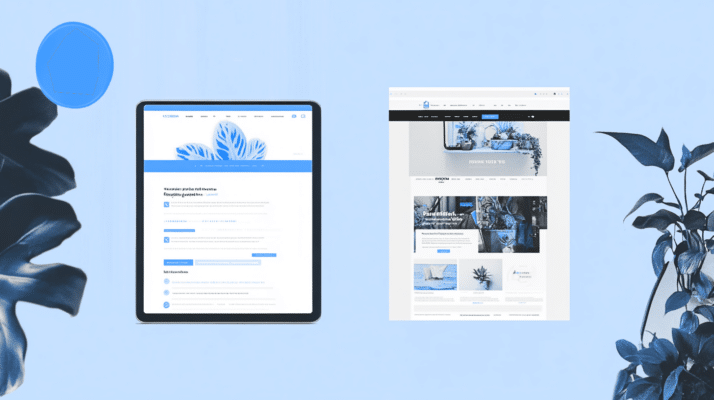
How a microsite is different from a landing page
Landing pages usually showcase one product on a singular page. They aim to generate as many leads as possible for that one product with minimal content. While this might sound a lot like a microsite, and while they can be similar in many ways, they are not the same thing. Single-page microsites usually include many design elements and still explain the product in depth, trying to answer every question. Landing pages usually stick to thinner content with minimal design elements since their main focus is to capture that lead.
TLDR: Single-page microsites are NOT the same thing as landing pages
When should you use a microsite
You should use a microsite to separate your main brand from an idea that is part of it. Examples of this are targeted audiences, product launches, event promotions, contests or giveaways, and just testing new ideas.
- Targeted Audience: A microsite is best used when you want to target a very specific audience—for example, people who are only interested in $3000 supercomputers. Since the entire site is targeted towards that one demographic, people are more likely willing to put their money towards whatever you are promoting. It can also be better for SEO purposes as search engines like Google know exactly who you are trying to reach and will show you to that audience.
- Product launch: If you have a new product or service you want to showcase, a microsite can definitely help. Product/service launches are by far the most common use of a microsite. It puts everything a user might need into a clean, organized site that should ideally answer all of their questions.
- Event promotion: So you have a seminar coming up, and you don’t know how to market it. A microsite should definitely be one of the options you consider. It can significantly boost your reputation and make your event stand out from everybody else. Even if it’s just something small, a microsite can give people the impression that your seminar is important, and they are missing out if they don’t sign up. Of course, the same applies to any type of event.
- Contests or giveaways: A microsite is a great tool for collecting entries and information from users. Influencers create microsites all the time for this exact reason. It makes the entire contest process super easy, from collecting entries to picking a winner, since it puts all the information in one place.
- Testing new ideas: Some companies will create a microsite just to experiment with different design choices or messages before adding them to their main site. This way, they can test ideas, conversion rates, and responses to the microsite to ensure its success on their primary website.

What the cons of having a microsite are
We have discussed the benefits of having a microsite, but many people forget to consider the negative aspects.
-
- Cost: These microsites are expensive. You need to find a web designer or developer to put everything together, which isn’t cheap. Since these sites are created on a separate domain, you will also have to pay for hosting. If you have multiple microsites, you must pay for individual hosting for each one.
- Time: While the website developer will do most of the work(unless that person is you), you will still have to provide all of the content and images. Reviewing revisions will require multiple meetings with your designer, and it can finally take weeks or months to get a functional microsite.
- Short-lived: The majority of microsites are created to promote something new or coming soon. If your microsite was for an event, once the event is over, you will have no use for the site anymore. This is why you must consider whether spending time and money on the site is even worth it in the first place. The hype for your product won’t last forever, meaning, at some point, people will no longer need your microsite.
How to market your microsite
90% of the time, the entire purpose of a microsite is for marketing. What’s the point if it doesn’t help get you more leads for your project? Let’s talk about how you can use a microsite to market your idea.
How to use SEO for your microsite
Search engine optimization (SEO) is used to help rank your site on search engines like Google, Bing, Brave, and more. If your site is properly optimized for SEO, search engines will put it near the top of SERP’s so your site is one people see and click.
While this is usually done for big websites, it can just as easily be done on your microsite. Let’s talk about the steps.
- Hyper-focused keyword strategy: First, determine your users’ needs. What are they searching for? Then, look for very specific keywords related to your brand. I recommend using ahrefs for keyword research. Once you have identified your keywords, incorporate them naturally throughout the website in titles, meta descriptions, H2 tags, and content.
- Compelling and concise content: It’s important that your content is high-quality. This doesn’t mean longer content but rich content. If you were reading the page, what would you want to see? It’s important you know the user’s intent and try to solve that as efficiently as possible on your page. They shouldn’t walk away with more questions than they came in with. Remember, microsites are about conveying one message, so keep everything short and to the point.
- Optimized URL structure: You can’t rank on search engines if they don’t understand your page content. Your URL structure can help convey what your site is about. They should include your relevant keywords while still being short and concise. For example, “slademarketing.com/what-is-a-microsite” is the URL structure for this blog.
- Proper header tags: Your heading tags are important. They emphasize important parts of your content and show the hierarchy. The H1 tag is your page title. It carries the most weight in SEO, so ensure it includes a keyword you want to rank for. The H2 tags will be the important parts of your page. If you want to make multiple points under an H2, you can add H3 and H4 headings as well.
- Image optimization: All of your images should be relevant and important to your microsite. They should help the user better understand the content. Alt text helps the search engine understand your image. The size of your images should be optimized to be small so your site is fast.
- Internal linking: Internal linking helps users find other relevant information on your microsite. It also passes page authority, which can improve the page that is getting linked to visibility in search results.

How to use social media for your microsite
Your microsite should have its own unique branding that is separate from your main company. Just like you created a separate website, you should also create separate social media accounts for your site. The best social media platforms for marketing are TikTok, Facebook, and Reddit. To determine what is best for you, you must determine where your target audience spends most of their time.
How to use TikTok for marketing your microsite
If you have an outdoor company and your microsite is about skateboards, then you can create funny and engaging videos on TikTok. You should find out what is trending now and use that to help make your brand go viral. In your profile and at the end of videos, you can link to your microsite, bringing you more traffic and hot leads.
Here are some secrets that we have seen used to go viral on TikTok:
- Hook viewers quickly: Your video should open with a hook that gets the viewer to stay and watch the rest. Oftentimes, hooks aren’t even related to the video, but they are interesting and attract the most amount of people.
- Create rich content: While viral content might seem like it requires little effort, it typically requires much effort that most viewers don’t realize. Your content should include captions, good lighting, and current viral audio to keep the reader engaged enough to watch the whole video and maybe even visit the microsite you are promoting.
- Post at the right time and frequency: Find out when your videos perform the best. This is when your audience is the most active, and this will become the best time to post. The better your video does early on, the more likely it is to go viral.
How to use Facebook for marketing your microsite
Facebook is another great tool. Now that you know your audience, you can join public Facebook groups and promote your brand there. Your microsite about skateboards would work great in some big skateboarding groups. As long as you follow the rules of the group, interact with other people, and post interesting content, people will happily visit your microsite.
How to use Reddit for marketing your microsite
Reddit is overlooked by a big part of the marketing world because it’s given a stereotype as “nerdy” and “weird,” but they have groups of just about any category and interest. If your site sells skateboards and somebody posts a thread wanting some good skateboard brands to check out, you can easily link to your site and get a potential customer. It has hundreds of millions of monthly users and is continuing to grow every day. Use it to your advantage.
3 examples of a microsite:
Example 1: Coca-Cola
Coca-Cola doesn’t just have a few microsites here and there. While it isn’t public, people think that Coca-Cola has hundreds to thousands of microsites. They are considered the “king” of microsites, and you’re about to find out why.

The Ahh Effect – Coca-Cola
They created multiple websites with different-length domains and different-length words for the word “Ahh.” They used this microsite to coin the term, so people think of Coca-Cola every time they take a sip of a nice refreshment and say, “Ahh.”
You can play games like Bottle Rocket on these sites. This campaign brought so much positive attention to the company’s brand and definitely worked as a marketing strategy.
Example 2: Spotify Wrapped
Spotify collects information on each user, such as the songs they listen to, their favorites, the genres they like, and even the time of year they listen to each song the most. At the end of the year, Spotify presents this data to every user so they can look back and see their year of listing to Spotify “wrapped.” It’s a cool showcase that users now look forward to at the end of every year.

Example 3: Website Grader
Website Grader is a tool released by Hubspot that scans your website for SEO or performance mistakes. It uses Google’s Lighthouse API to achieve this, and it is 100% free. (Who doesn’t love free things?) You could even use this tool on your own microsite.

How to build a microsite in 6 steps
You have just learned the definition, secrets, and marketing techniques of microsites, and you have even seen examples of them. You know why and how they work, but the question remains: How do I actually build one?
As someone who has built many microsites in the past, you don’t have to worry. I will walk you through an easy, 6-step guide to building your very own microsite.
Step 1: Choosing an idea
Before you can do anything else, you must have an idea for your microsite. Are you releasing a product or holding a seminar that you want people to attend? It’s important that you know exactly what the site is for before you start building it.
While choosing an idea, you can also determine your intended audience. Since the microsite is intended for a targeted group, you should gear the entire design process toward that group.
Step 2: Getting a domain
Now it’s time to get into the technical stuff. Once you have figured out your domain name, you can purchase it from any domain registrar. I personally recommend GoDaddy since they make the process of buying and setting up a domain super easy and affordable. You can also use the same domain registrar you used for your main site since it will already be familiar.
Step 3: Choosing the right CMS
Choosing the right CMS really depends on your microsite’s main goal and target audience. There are many options, but I’ve narrowed it down to my favorite three.
- WordPress: WordPress allows for the most customization since it has many free-to-use plugins and a massive user base. Since it can fit the criteria of almost any site, this is my personal recommendation for your microsite.
- Shopify: If you are selling a physical product online, you should definitely take a look at Shopify and see if it fits your goals. They are one of the most popular CMS platforms in the world and have very easy setup and payment integrations.
- Drupal: Drupal is a great choice if you are looking for something that is a little more advanced and offers tons of customization. It is often times used for large companies that need more than the average person. If you have a large-scale operation, Drupal might be worth looking into.
Step 4: Mapping out your microsite
Now that you have chosen a good CMS for you, you need to decide everything you want to be on your website. This includes the number of pages, forms for lead generation, and content you want to use. You should spend a lot of time on this stage as it’s the outline for your entire project. You can also put together some design thoughts you want on your site. This way, when you are putting together the website you can look back at any ideas you might have forgotten.
Although the outline is important, remember that you can change it later if you change your mind or like another idea more.
Step 5: Putting it all together
It’s time to put your outline to work and develop your dream microsite using everything you have learned here. You should have most of your ideas in your outline, but as you work on the site, you are bound to come up with more. As long as you remember the goals of your site, putting it together should be pretty straightforward.
Once you are happy with how everything looks, you should show it to family or friends to get their thoughts. The more opinions you get, the better, so you can make the changes before you have to go live with everything.
Step 6: Launching the microsite
You now have the perfect site ready to launch. Use our marketing techniques to get the traffic this site deserves. I recommend setting up analytics to track performance and make necessary changes. If you have multiple design ideas, you can even perform A/B testing to see which one performs better. Google Analytics is best for tracking, but most CMSs have integrated tools that you can also use.
Final Thoughts
Microsites are powerful tools for targeted marketing. They offer simplicity, focus, and a direct way to connect with your audience. Whether you’re promoting a product, launching a campaign, or testing a new idea, a microsite can help you stand out.
You now have everything you need to know to get started with your own microsites.
If you need help putting something together, feel free to contact me. My team and I will then contact you about your project.
