
Websites are evolving rapidly; even the most modern sites can seem outdated in just a few months. This is due to the influx of new web design trends and the ever-changing needs of users and businesses.
In addition, businesses that want to be competitive need to be updated with the latest SEO policies. This will ensure good SEO rankings and better visibility online.
As search engines reward sites that they deem high-performing based on their respective criteria, web developers and designers must keep up with SEO trends to improve customer engagement and satisfaction when visiting a site.
In this article, we will discuss:
Emerging Web Design Trends
New trends are continuously emerging to enhance the user experience, improve accessibility, create more aesthetically pleasing front-end interfaces, keep up with changing SEO algorithms, and more.
Below are some trends that focus on appearance, performance, and function.
1. Dark Mode
Dark mode, or Low-Light UX, allows users to switch from the default bright interface to one with a dark background, lightly colored texts, and other elements.
Dark mode has many benefits, especially for those using their devices in dimly lit environments or at night. It is aesthetically pleasing and provides comfort and ease to the eyes. In addition, using dark mode is a battery-saving measure, especially for those who utilize OLED and AMOLED screens.
This feature is hugely popular, especially for those who spend long hours in front of screens, to reduce eye strain. Numerous companies, such as Google, Facebook, Twitter, and Apple, have also utilized the ability for users to turn Dark Mode on and off due to its aesthetic appeal.
This trend can easily be implemented via CSS. Developers should make it a point to offer Dark Mode as an option for users visiting their sites for their comfort and personal preferences.
2. Neumorphism and Glassmorphism
Neumorphism and glass morphism are two upcoming design trends that are very popular nowadays. Different but similar, both of these styles provide a minimalist yet futuristic appeal to web pages, giving a clean and layered look.
Neumorphism has a flat design that has shadowy borders along UI elements. This 3D effect on an otherwise flat surface gives elements like buttons a raised or embedded look.
This design is best for those who want a clean-looking page, mobile apps, and online dashboards.
On the other hand, glassmorphism provides a blurring effect similar to frosted glass. Used in elements within pages such as login screens, glassmorphism provides a subtle layered effect, allowing certain elements to shine while fading others in the background visually.
Blended with vibrant colors and images, glassmorphism provides very sophisticated effects to otherwise bland interfaces, enhancing the overall appeal and user browsing experience.
Major operating systems such as Windows and MacOS already utilize neomorphism and glassmorphism, with many apps and sites quickly following suit. By mastering how to use these styles properly, web designers can provide sleek and modern designs that guests will greatly appreciate.
3. Minimalism and Clean UI
Clean UI is simple yet impactful, prioritizing efficiency over less useful clutter and elements that serve no real purpose. Unlike previous trends, where the more content you can cram into a page, the better, minimalism is the new trend that many sites follow.
Minimalistic sites let users focus on their content, improving readability and efficiency. Proper use of white spacing also facilitates navigation with fewer distractions and compartmentalization.
Even formatting is often simplified, foregoing loud fonts and colors for more basic design templates and themes. On a performance basis, this also means fewer scripts or media to load, meaning enhanced performance, which is great for throughput and SEO rank.
Brands like Apple now focus on minimalist designs, prioritizing functionality without sacrificing aesthetics. Clean, fast-loading, minimalist, and user-friendly websites are now the norm, ensuring that content and functionality, not design, reign supreme.
4. AI-Powered Design Assistance
Artificial intelligence has emerged as a useful tool for automating tasks and providing suggestions, including in web development and design.
Many AI-driven tools now exist that can help designers create functional and aesthetically pleasing sites.
Platforms such as Wix ADI and Adobe Sensei offer examples of these tools. These software programs can analyze user needs and preferences and provide suggestions and improvements.
Some platforms also allow automatic code generation to implement said changes, significantly reducing production time with less effort and cost.
AI has become indispensable for those who want to save resources while still achieving the desired output by automating processes involving content creation, layout design, integration of new functions and features, real-time chatting with users, and more. It can also use real-time or historical data to do this.
AI has also opened up a whole new industry, with organizations scrambling to unlock their full potential and create and maintain their sites with minimal effort and cost through machine learning and AI-powered technologies.
The Future of Web Development
The future of web development is here, though new trends are still in their infancy. They will be ready to take the world by storm in the coming years and even months.
Anticipating these trends and changes will significantly impact your ability to stay ahead of the competition, especially as technology continues to evolve rapidly.
To enhance the browsing experience, increase performance by leaps and bounds, and keep up with SEO algorithms, you can expect the future to come sooner rather than later.
In this era of innovation and AI, you would expect these cutting-edge technologies and frameworks to be the future of web development.
1. AI and Machine Learning Integration
Artificial intelligence is still in the early stages of implementation, but its impact on web design and development has already been massive. We can expect more evolution and more functionalities that AI can offer once this technology matures even further.
AI can seemingly do everything, from automating tasks to personalization, content generation, and chatbots. Machine learning can instantly gather and analyze massive amounts of data, provide ideas and initiatives, and even outright perform tasks based on prompts to give the best results.
This is done at a pace that no human can ever perform manually.
AI will implement real-time threat detection for malicious codes and other cyberattacks in the future. As security is one of the biggest issues online, expect AI to evolve to meet these needs continuously. It will predict behavior patterns and other factors to protect websites adaptably and in real time.
Look at AI to streamline web development, design, and maintenance through machine learning and tools that will make life easier for developers, designers, and users.
2. Progressive Web Apps (PWAs)
Progressive Web Apps, or PWAs, will soon be the norm. They blend the best of web and mobile applications, providing offline-capable, quick-loading, and more accessible pages that enhance the user browsing experience.
PWAs integrate capabilities such as push notifications, background syncing, faster development times, and lower development costs. They incorporate mobile app-like capabilities into websites that users regularly access through their Internet browsers.
Using technologies such as service workers and Web App Manifests, PWAs aim to reduce bounce rates, increase conversion rates, and otherwise improve SEO rankings by improving the overall user experience through accessibility and scalability.
Starbucks, Pinterest, and Twitter are examples of sites that have already utilized PWAs. This has resulted in high engagement and better satisfaction rates, and these companies are reaping the benefits of their initiatives.
3. No-Code and Low-Code Development
In the past, creating a website required learning one or more coding languages. Now, no-code and low-code development platforms are changing the game, as software with drag-and-drop capabilities allows non-technical users to design sites independently.
Not only that, but users require little to no coding skills to utilize and customize templates and create workflows, allowing businesses to no longer hire specialists to create sites for them.
Platforms such as WordPress, Webflow, and Bubble allow regular people to design rich and functional sites without learning or writing a single line of code. However, in certain use cases, learning coding languages would still be required to increase flexibility, scalability, and functionality.
In time, these platforms, in cooperation with AI, can generate fully functional sites, further eliminating the need for coding knowledge. This can also speed up site development, improvement, and maintenance without solely relying on the skills of a select few to facilitate these tasks.
4. Voice Search and Conversational UI
Voice assistants like Alexa, Siri, and Google Assistant will become more prominent as the future of web development unfolds. Compared to traditional input like key presses and mouse clicks, voice input will be the new trend for accessibility purposes.
Artificial intelligence will be widely used through natural language processing techniques, and keyword detection will be widely used for navigation and communicating with chatbots, turning input into a conversation rather than a rigid command prompted by a keyboard, mouse, or screen tap.
Conversational interfaces will soon be the norm, and they will benefit business owners by increasing accessibility and engagement and improving SEO rankings.
5. Cybersecurity and Data Privacy
Cybersecurity is of utmost importance to websites, and as new threats adapt to exploit vulnerabilities, hosting providers must also evolve to counter these threats.
SSL encryption and multi-factor authorization are now norms to restrict access and enhance security, especially when it comes to personal and financial information. Guidelines and policies regarding data handling must also be met, ensuring that data collection is done within these parameters and requirements.
Regular security updates and audits and instant threat detection through AI-driven tools will be even more critical than they are now. Websites must invest more time and effort in this area to protect user data and build further trust in their brands.
6. Web 3.0 and Decentralization
Blockchain technology will soon no longer be a buzzword. Decentralized systems will become a normal part of the Internet’s evolution into more secure and accurate data storage and processing.
Web 3.0 will focus on decentralization and AI using blockchain networks, a major departure from traditional methods of storing data on dedicated servers. This will ensure more secure ecosystems with less chance of tampering and fraud.
Decentralization will benefit businesses by allowing them to rely less on major tech corporations. Businesses can also enhance security, efficiency, data integrity, and user autonomy using decentralized apps and peer-to-peer networks.
While still relatively new, decentralization will be the new standard and trend for developing new web applications for consumers, organizations, and businesses.
7. Augmented Reality and Virtual Reality
Augmented reality (AR) and virtual reality were once considered novelties. Now, they are starting to become a requirement, especially for sites that focus on engagement and interactivity.
Both AR and VR utilize immersive elements, virtual spaces, and 3D imagery to give users a sense of realism. This is best for sites that facilitate tours of rooms or physical spaces, such as in the real estate industry, and for e-commerce sites that would like to highlight their products uniquely.
These technologies may also be used in e-learning, where AR or VR may be used for immersive interactivity and visualization.
These technologies transport the audience into a different reality, but the technologies make the experience as real as possible
Although still not as other technologies, tools such as WebXR are already available to create engaging, immersive, and responsive Augmented Reality and Virtual Reality worlds that will turn usual 2D displays into a thing of the past.
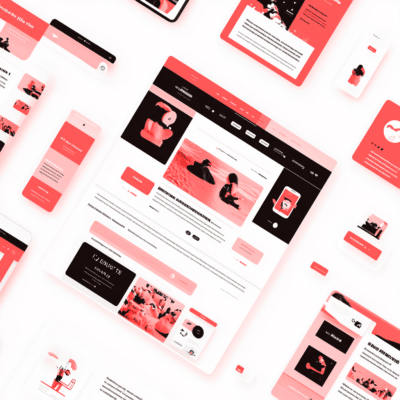
Tools to Learn
As new technologies evolve, so will the tools we use. Web developers and designers must keep up with specialized software that can help them capitalize on these trends to create visually stunning yet highly functional sites.
Examples of tools that professionals should get familiar with as soon as possible include:
- Adobe XD/Figma – for UI/UX design
- Sketch – for vector-based web design
- Javascript/CSS – for the creation of scripts for functionality, interactivity, and style design
- Greensock – for animations and interactive elements
- Webflow/WordPress/Bubble – low code/no-code development platform with little to no coding required
- Wix ADI/Adobe Sensei/Uizard – automate design and efficiency using AI
- Yoast SEO/Rank Math/Google Lighthouse – to help improve SEO rank
- Blender/LottieFiles – for 3D graphics and motion animations
- Contentful/Strapi – headless CMS for sites that can be maintained across different platforms and frameworks
- BrowserStack/Lighthouse/Chrome DevTools – to ensure compatibility and efficiency across multiple devices and browsers
Learning these tools can be an immense advantage for developers, as these will allow them to build future websites, keeping in line with current and upcoming web design trends.
Conclusion
The future of web design and development is ever-changing, and we must adapt to these changes as quickly as possible. Our competitors will also be scrambling to evolve.
With new technologies come new learnings and skills to develop. This will allow you to stay ahead of the design, functionality, and SEO curve.
Learning about current and upcoming web design trends can help you develop the skills early on by familiarizing yourself with the tools to create sites that will reflect the future of the Internet.
Whether it be new design styles, AI technologies, or entirely new frameworks, developers and designers must ride the next wave of web development so that future sites can keep up with users and the industry’s demands.
