
A prototype, whether a product or software, is necessary before production. It is a crucial intermediary between an idea and a tangible or usable product.
A prototype is intended for testing basic functionality, gathering feedback for further improvements, and attracting investors who can help fund the production of the final product.
This article aims to provide you with a step-by-step process of creating a prototype. This includes:
- Defining objectives and requirements
- Conducting market research and feasibility analysis
- Sketching initial concepts and wireframes
- Choosing the right prototyping method
- Building a Minimum Viable Product (MVP)
- Testing and gathering feedback
- Securing funding and investor interest
Following the steps above, you can create the perfect prototype and launch your idea with minimal hassle, effort, cost, and maximum efficiency.

Step 1: Define Your Objectives and Requirements
The most essential part of prototyping is understanding the purpose of your product. Once completed, it is also important to know your product’s mission and how it can help your business or startup reach its goals.
Questions that need to be answered during this phase include:
- What problems will your product solve?
- Who is your target market?
- What features will be available that can help demonstrate its value?
Answering these questions clearly can help you develop your product in a focused manner. In fact, it can even help you decide whether to continue creating the product.
A study by CB Insights reveals that 33% of startups fail because there is no market need for their developed products.
Knowing your product’s purpose, who your target audience will be, and how your product can provide value to them can give you many insights into how your product should look and function.
Step 2: Conduct Market Research and Feasibility Analysis
Market research helps ensure that your idea must be realized before any costs are incurred or effort is put into prototype development.
This involves analyzing factors such as industry trends, competitors, customer needs, etc. This ensures viability and gives you an idea of the probable demand for your product.
Areas that need to be evaluated during this stage include:
- Existing products or solutions in the market that are similar in nature to your idea
- Gaps and opportunities for innovation, including pain points for customers that your product can potentially address
- Competitor’s pricing and other comparative areas, if any
According to Investopedia, one of the largest reasons startups fail is misreading or misunderstanding market demand. A thorough market analysis is required to avoid mistakes that cost time, effort, and money.
As such, feasibility studies done through research, interviews, focus groups, and the like are necessary. Determining initial costing figures against possible pricing would be necessary to see profitability.
It would also be important to assess any challenges you may encounter during the development and release of your product to determine whether they can be overcome, at what cost, and whether they are worth the resources.
This will also allow you to rehash and refine concepts and design ideas before proceeding to the next steps of the prototyping cycle.
Step 3: Sketch Initial Concepts and Wireframes
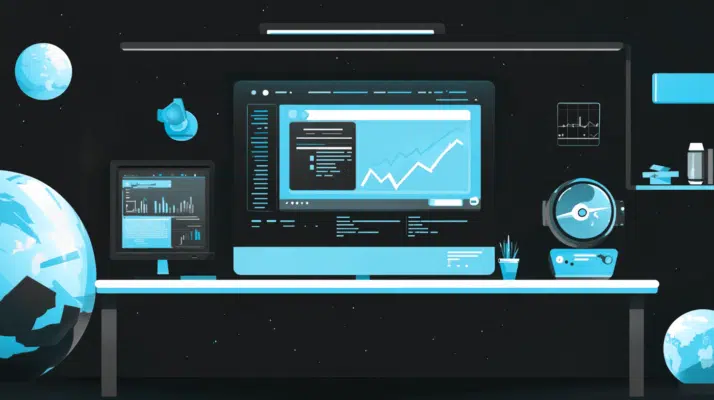
Sketching ideas or designing wireframes will provide a visual impression of the product’s structure, workflow, functionality, and other elements.
These concepts and designs will serve as a rough sketch or blueprint of the prototype, with detailed or general descriptions of features and usability. At this point, the site structure may also be defined for websites, providing control placement, and rough designs and elements.
During this stage, the following factors may be defined:
- Rough draft of the product’s appearance
- Key features
- Navigation and usability
The design must meet the standards of usability, aesthetics, ergonomics, and other factors that will make your product stand out.
Wireframing can be done using tools such as Figma, Adobe XD, or Sketch. This is superior to other methods as it provides a more dynamic approach to tweaking layouts and designs and better seeing any technical or usability issues.
This stage can be repeated as often as possible until all parties are satisfied.
Step 4: Choose the Right Prototyping Method
There are two main types of prototyping: low-fidelity and high-fidelity. Each method has pros and cons; depending on your needs, it would be best to use it.
Lo-Fi prototypes are simple yet must be clear enough to be understood. Hand-drawn sketches, wireframes, or paper models fall into this category. Low-fidelity prototypes often have few to no moving parts and cannot be interacted with by the user except through the most basic movements or functions.
This is best for early-stage brainstorming and getting feedback from entities such as focus groups or the production team.
On the other hand, hi-fi prototypes are more detailed and will closely resemble the actual product. Digital or 3-D-printed models usually fall into this category. High-fidelity prototypes often give users a clear idea of the product, with a detailed design and some functioning moving parts or pages.
These prototypes are commonly used for presentations to investors or focus groups, pre-production validation, or user testing.
The early stages of prototyping usually require low-fidelity prototypes. In contrast, high-fidelity prototyping, which requires startups to invest in more materials and time, is done at the later stages and is close to actual production.
Step 5: Build a Minimum Viable Product (MVP)
A Minimum Viable Product (MVP) is similar to a beta or semi- or fully functional version of your prototype. Oftentimes, an MVP has the most important features of the product already available, with designs still rough at the edges and additional bells and whistles not yet included.
An MVP aims to provide potential users with a tangible semi-finished product so that the concept can be tested and user acceptability can be gauged.
This approach is best compared to creating a full assembly line or gathering an entire development team, saving costs before a user base can fully validate your idea.
The MVP must help you gather user feedback, which you can then integrate into the final product. Despite its simple form, it should also build interest in your product.
Step 6: Test and Gather Feedback
With your MVP, you can test functionalities and get all important user feedback. During the user testing phase, developers will be able to determine, among others:
- Any performance issues
- Technical problems
- Design flaws
- Usability or user experience issues
- Problems with aesthetics or ergonomics
- Areas for improvement or optimization of features
This process should be iterated and done repeatedly, with comparative A/B testing to determine which product versions are best based on actual user testing.
This can be done through interviews and surveys from actual users that have tried out the product, with a larger sample size, the better.
Testing, gathering feedback, and making improvements based on that feedback will ensure that you are putting out the best version of your product as it evolves based on what the market truly needs, balancing cost and usability into the equation.
Step 7: Secure Funding and Investor Interest
It can be difficult to secure funding or for management to approve a project without a well-developed prototype. Without something tangible that can actually be used, investors will have a very hard time understanding your pitch, making them hesitate to invest.
Your prototype and market research must be on point. You must also provide hard facts that prove the product’s value and marketability.
Of course, a well-prepared presentation highlighting the product’s features and sales and conversion material is necessary to encourage investors of your product’s potential and ROI.
As such, both your prototype and your presentation must be on point to help get the product off the ground, after that, you can begin with full-blown development and production.
Conclusion
The perfect prototype requires multiple processes and iterative steps to ensure your vision becomes a reality.
While you can go directly to development, this can be a recipe for failure, especially for startups. Skipping the steps of the prototyping process may cause you to miss critical information that can make or break your product.
If you found this guide helpful for your prototype, consider sharing it with a friend or partner who might also benefit from the information.
