
In today’s fast-paced world, with technologies catering to rapid content consumption and shorter attention spans, videos in various formats are among the top types of media that help businesses achieve their goals.
Whether for attracting and retaining their consumer base, training personnel to promote brands or for other purposes, videos have cemented their place across industries as an indispensable tool for getting their intended message across.
Good quality videos are engaging, genuine, and authentic. They should be capable and efficient at delivering messages in a manner that is easy to digest and clear for your audience.
Producing high-quality videos such as these is no easy task, however. Corporate video production requires several steps, meticulous planning and execution, and various teams working in tandem toward a common vision and goal.
Compelling and engaging videos can provide multiple benefits, so those seeking to produce these types of media should take heed of the steps and strategies mentioned above to ensure that their output is in line with business goals and that they can get the desired results.
- Understanding the Role of Corporate Videos
- Pre-Production: Planning for Success
- Assembling the Right Team
- Production: Capturing High Quality Content
- Post-Production: Polishing the Final Product
- Distribution and Performance Analytics
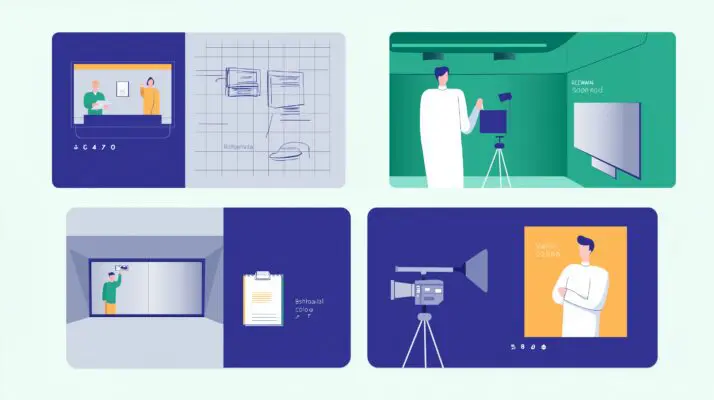
1. Understanding the Role of Corporate Videos
According to a study by Wyzowl, 91% of businesses use videos as a marketing tool. However, videos can do so much more.
Corporate videos are assets, and they all serve a difficult purpose depending on your business’s needs.
Different types of corporate videos include:
- Explainer Videos – used to explain and simplify complex products or services
- Training Videos – used for internal or external sharing of knowledge regarding processes or similar concepts
- Testimonial Videos – used to record positive feedback from clients or other entities, and are used to build trust and credibility
- Company Culture Videos – used to increase employee engagement and provide a brief on what it’s like to work within the organization
- Product Demo Videos – used to provide an overview of a product and highlight its features, as well as to entice customers to make a purchase
As videos serve numerous purposes, they must be custom-fitted to your target audience. Factors that must be considered include length, tone, formatting, and personalization, among others.
With current trends in technology, expectations such as interactivity and even virtual reality have also begun to be the norm, especially for high-end companies that can invest in these technologies.
While corporate videos may seem trivial to some, especially for small businesses, they are actually a very powerful tool that can be used in a myriad of ways.
Understanding how corporate videos can help your business move forward can help you, management, and investors have an aligned vision in proceeding with these types of initiatives and strategies.

2. Pre-Production: Planning for Success
Corporate video production begins long before you press the record button. Proper strategizing before the camera rolls is the secret to a successful corporate video.
A well-planned and well-documented pre-production phase can ensure the success of your videos. This entails defining and establishing key elements to ensure that you will be able to meet your goals.
These are the things that you need to do during the pre-production stage.
Defining Objectives and KPIs
Before everything else, ask yourself, “What is the purpose of this video?”. By answering this question, you can determine if the video has a solid purpose that can help your business.
This can be used to increase brand awareness, train employees, generate leads, or boost morale within the company, among other things.
From this, you can develop Key Performance Indicators, or KPIs, that will help you determine how to measure the success of your video upon launch. This will also give the team an aligned vision of the goal that everyone needs to achieve.
Understanding Your Target Audience
Different audiences will require different approaches to conveying the message you want. For example, B2B viewers would prefer a more professional tone, while B2C consumers may want more emotionally compelling and engaging content.
Those involved in pre-production should put themselves in their audience’s shoes to determine length, tone, delivery method, etc.
For those who want to reach international markets, accessibility and inclusivity options such as subtitles, language versions, and cultural elements must also be considered and included.
Budgeting Smarter with Technology
Balancing your vision with how much you are willing to spend is crucial. Budgets for corporate videos can now be easily done through AI-driven tools.
Budgeting software such as StudioBinder and Celtx can estimate costs, considering factors such as scripting, crew, site locations, equipment, and other expenses, making it a critical part of the pre-production process.
Determining the proper budget, plus 10 to 15% for contingencies, can prevent companies from overspending and compute ROI as part of business KPIs.
Scripting and Storyboarding
Scripting for corporate videos has never been easier, especially with the rise of AI. Tools such as ChatGPT can streamline the scripting process, requiring minimal time to produce, but human intervention and involvement will still be needed.
Storyboarding, or visualizing the script through illustrations or sketches, can also be a huge timesaver. It can help eliminate or minimize reshoots and provide stakeholders with a vision of the final product before actual production.
Scripting and storyboarding are equally important parts of the pre-production process to align everyone with the direction the team intends to take the video they want to create.
Choosing Format and Platform
Each platform, whether on LinkedIn, TikTok, or an internal video, has its own unique format. This can range from format to specs and tone.
For example, videos to be used as reels on Instagram need to be short, usually under 60 seconds. Some platforms also need to be shot vertically. On the other hand, training videos should be longer, more detailed, and shot horizontally to capture more of the scene or screen being recorded.
Your corporate video’s format should align with where it will be placed. This will prevent videos from needing to be stretched, eliminate boredom and disengagement among your target audience, and provide your viewers with as much information as possible with the medium provided.

3. Assembling the Right Team
A good team with a well-rounded set of skills among members is critical if you want to create a good-quality corporate video.
Several variables should be considered to assemble the best team possible, from sourcing team members to assigning roles to determining how and where to work. These must be discussed clearly before the shoot to prevent miscommunication and unnecessary setbacks.
In-House vs Agency vs Freelancers
In-house teams will give you much control, especially as they are under your payroll. They are also best suited as they are most aware of your brand, ensuring consistency.
However, having an in-house team can be detrimental if creating videos is not part of your regular marketing or training strategy. Stagnant teams and equipment, if any, can lead to unnecessary overhead expenses.
Conversely, creative agencies can be hired on a project basis and provide end-to-end services. This is ideal if you want high-stakes campaigns that must be professionally done with the highest quality possible.
Common disadvantages include increased costs, possible misunderstanding of concepts and directions, and conflicts of schedules.
Lastly, freelancers offer flexibility, and they are a great option for filling out spots that require skillsets that no one on the existing team has. Freelancer platforms such as Fiverr or Upwork have many freelancers with a wide range of skills that may be useful for your team.
However, those who hire freelancers often face the same problems encountered with creative agencies, along with issues such as a lack of supervision and unreliable performance, especially if the freelancer in question has taken on multiple jobs.
For best results, many companies use a combination of in-house and external creators when producing corporate videos. This provides the best of both worlds and complements the numerous shortcomings of each individual option.
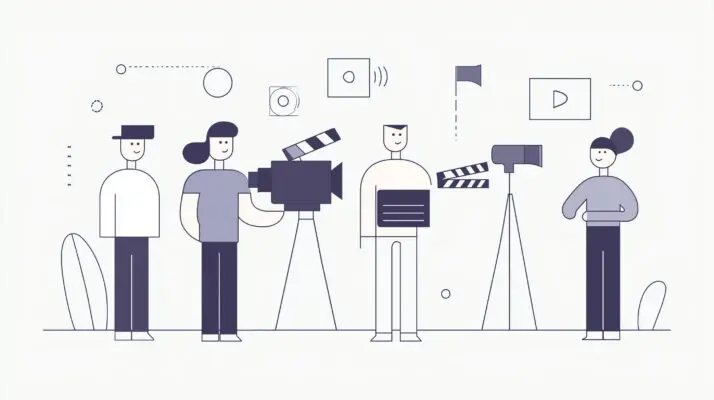
Key Roles in a Production Team
- Producer – Responsible for overseeing operational concerns such as timeline, budget, and logistics
- Director – Guides the creative aspect of production, including visions, shot composition, acting, voiceover, and others.
- Director of Photography (DOP) – Responsible for cameras, lighting, and other operations necessary to bring the director’s vision to life
- Editor – Responsible for assembling raw footage into the final product
- Sound Designer – Managed sound recordings on set and mixing during post-production.
- Motion Graphics Artist – Responsible for creating animations, effects, and other elements outside of raw footage.
Other roles that are equally valuable as other team members are scriptwriters, casting agents, talents, drone operators, and other specialists who can help during the product and post-production phase.
When hiring team members for any role, consider their portfolios and expertise in the equipment or other tools that you will be using. It would also be a good idea to seek references from trusted people in the industry.
This will ensure that you can create the best team of people, allowing you to work seamlessly and be capable of creating the best product possible.
Remote Collaboration and Hybrid Workflows
Collaboration in 2025 has never been easier with collaborative software such as Notion and Frame.io. Users can also review and post comments directly on drafts or video clips for any proposed revisions or feedback.
Teams should leverage technology to minimize turnaround times, especially for teams that are not located in the same geographical location. Set up an online collaboration platform for a more streamlined process.
4. Production: Capturing High-Quality Content
The production phase is where you get rolling, ensuring that the previous plans, strategies, scripts, and storyboards are implemented as actual footage.
At this stage, teams can leverage a 300 billion dollar audio and video market industry to create high-quality videos. Of course, strategy, skill, and core fundamentals in video production are still a must.
Modern Equipment and Innovations
Video production teams have access to a wide range of equipment that almost guarantees high-quality shots. From cameras to drones that can shoot up to 8K resolution to advanced LED panels for CGI purposes and directional lavaliers that always capture crisp sounds, there’s no limit to how technology can help ensure video and audio quality.
Yet, entire films are just shot with a normal iPhone. This means that, as the old adage goes, it’s not the tool but the user that matters more. By following principles such as three-point lighting, the rule of thirds, providing ample headroom, and other guidelines, directors and cinematographers can and have been capable of delivering great output with minimal equipment.
As such, teams must be capable of working with a wide range of equipment but must still have the core skills necessary to use whatever tools they may have to still provide quality content.
Studio vs Location vs Virtual Sets
Choosing the right environment for a shoot is critical, as your scenery will play a huge part in video production for aesthetic and logistics-related reasons.
Studios are great for interviews, product demos, and classroom-type training. Almost all elements can be controlled, and greenscreens can effectively be utilized for post-edit work.
On-location shoots can be expensive and will remove some control from you, especially regarding weather and lighting. However, the advantage of realism and immersion, especially during training or walkthroughs, cannot be beat.
Virtual production sets are where actors are shot against LED backdrops. These backdrops can then be used to add CGI effects and animations during the post-production editing phase. LED backdrops may also be used to project virtual backgrounds in real time.
These shooting locations may be combined or used exclusively, depending on the needs and preferences of the video to be produced.
Accessibility and Inclusivity
Corporate videos in 2025 need to be more diverse and accessible, especially if they want to reach and engage with a global audience.
Proper planning must be made for factors such as on-screen captions or subtitles, representation of on-screen talent, and consideration of cultural taboos.
Producers must also consider language packs for non-English native speakers and prevent flashing imagery from triggering seizures.

5. Post-Production: Polishing the Final Product
Post-production is where the real magic appears. Using raw footage, editors and other specialists create the final cut using tools, software, and their own creativity.
Several factors need to be considered to create professionally done, cohesive, and effective results. These are discussed below.
Editing Workflows and Software
Editors now have very powerful AI tools at their fingertips, which can help them with tasks that usually take up a large chunk of their time. This allows them to focus on critical tasks such as selecting the best takes from raw footage.
Using software such as Adobe Premiere Pro or Runway, editors can easily automate tasks such as scene detection, transcription, and even assembly of rough cuts.
Over 65% of editors now use AI-driven video editing software. This is a clear sign that corporate video production is definitely becoming the new normal due to the numerous benefits it provides in the editing process and overall workflow.
Motion Graphics and Brand Elements
Visual branding is important to ensure that, in addition to capturing the attention of your audience, brand recognition is also established.
Important visuals include consistent typography and color palettes and inserting company logos throughout your video.
Motion graphics, animations, and illustrations can help your audience better understand concepts and can help break the monotony, especially for longer videos.
Voiceovers, Music, and Sound Design
Sound covers several aspects, including voice-overs, sound effects, and music overlays. Again, sound engineers can leverage AI to streamline this process and mitigate costs.
AI-driven voice tools such as ElevenLabs can be used instead of hiring actual voice talent. On the other hand, platforms such as Artlist.io and Epidemic Sound can provide royalty-free music that can add more appeal to your videos.
A good balance of music and effects that is not intrusive can add more to your corporate video. Make sure, though, that it is not overpowering and elevates your message rather than makes it worse.
Versioning and Platform Optimization
Corporate videos must be optimized depending on which platform they are launched on. Follow guidelines and best practices for each platform.
For example, YouTube videos and internal presentations should use the horizontal 16:9 format. Instagram and TikTok reels and shorts, on the other hand, use the vertical 9:16 format. Others, such as on Facebook and LinkedIn, even use the square 1:1 video format.
AI tools can also automatically adapt videos based on the chosen platform. This minimizes manhours and other expenses while ensuring you have the appropriate video version and format for its intended purpose and launching point.
Feedback and Review Cycles
Before the final release, there should be a thorough review to check for any production flaws. This is also the time to make comments or suggested changes before the final cut.
Platforms such as Wipster can streamline the review and feedback process, providing a consolidated location for change requests that can immensely help teams edit the final version of your corporate video.

6. Distribution and Performance Analytics
Once the final cut of your corporate video has been polished, it is ready for distribution. However, distribution is not as easy as it seems and must be planned properly to ensure its success.
This entails choosing the right channels for the video’s publication and tracking performance metrics that will determine its success. Details of this phase are discussed further below.
Choosing the Right Channels
Your video can be distributed through several channels, depending entirely on its purpose and intended audience.
Internal platforms: This is intended for internal company communications and training. Videos for this purpose can be published in internal or secured channels such as Microsoft Stream, Vimeo Enterprise, or Slack.
Tools like Microsoft Stream, Vimeo Enterprise, and private Slack or intranet channels are ideal for training or internal communication videos.
For those with their own sites, this can also be a good place to publish their videos. You can also send video links via email newsletters. By hosting your videos on your own site, you can ensure they will always be available. However, make sure that these videos are evergreen and can be used to generate leads.
Social media such as LinkedIn, Instagram, YouTube, or TikTok are among the most popular channels for businesses that want to have a wide reach. Ensure proper formatting, tone, and other guidelines for optimum effectiveness and aesthetics.
Paid media are ads that will show up on your target audience’s accounts. They are not organic and will stop once you stop subscribing. Paid media is best for time-sensitive videos and to target a specific consumer base.
SEO and Video Optimization
Once your video has been created, use it to its full potential. Research shows that using a video on your landing page can increase conversion rates by up to 86%.
Of course, this would not matter if visitors don’t visit your page, which is where SEO and Video Optimization would come in. Tools such as Vidooly or Tubebuddy can help with this.
Aside from usual website optimization, you can also make your video SEO-friendly by providing the right titles, descriptions, keywords, tags, and transcript that will help with proper indexing. Proper schema markups can also help immensely with your online presence and visibility.
Tracking Performance Metrics
Once your video has been launched, it’s important to track factors such as the number of views and reach, watch time and retention, Click-through rates (CTR), shares, engagement numbers, and lead conversions.
These figures will give you a definitive idea of how successful your video campaign is and will help you decide on future action plans.
Depending on where your video was published, tools such as Google Analytics, LinkedIn Campaign Manager, YouTube Studio, and Vidyard are essential to help you determine if your videos are doing well across certain locations or demographics.
Iterating Based on Data
Like with most projects, companies that aim to produce videos regularly should use factors such as KPIs and general feedback to determine what they did right and which parts of the cycle need improvement for future content.
AI tools like the ones mentioned above can help you understand analytics and provide suggested edits, such as shortening videos to help improve drop rates.
Understanding pain points, past challenges, and user feedback can help you produce even better content that will have higher engagement rates and generate better KPI metrics.
Conclusion
Corporate video production is no longer a nice-to-have—it is a necessity. From training and onboarding employees to launching new products or helping increase brand awareness, videos are now an essential part of every aspect of operations across a wide range of industries.
However, creating great corporate videos requires more than creativity. Steps such as planning, production, post-production, and release involve many moving parts.
So, whether to help your audience understand your product, help train personnel, or boost sales, now is the right time to invest in efforts to create and produce strategies that will allow you to create thoughtful, engaging, and insightful video content that can be one of your company’s most powerful assets to date.
PS: Need help marketing your new video? Reach out to us so we can take your video to the next level!
